Finish Without Pretending the Cost Was Noble
Personal crisis changes production capacity. The honest response is to reduce the system to essential work without glorifying the damage.
Read the noteNotes from Wayne H. Johnson Jr.
Lessons from the image and the machinery. Directing, production, creative leadership, AI systems, and the work required to finish.
Back to the main site
From the factory floor
Concept art, a locked pencil-to-paint sequence, factory revisions, lettering, and the finished 100-page graphic novel.
Read the production case study
Completion ends the pressure, identity, and daily rhythm that carried the project. Relief may arrive beside disappointment.
Read the noteMore from the production office
Personal crisis changes production capacity. The honest response is to reduce the system to essential work without glorifying the damage.
Read the note
The final mile fails when delivery demand exceeds the production infrastructure built to carry it. Measure capacity before the deadline does.
Read the note
A temporary version is useful only when the learning it creates is worth the labor you knowingly plan to discard.
Read the note
A good new idea can still be the wrong production decision when it expands the work after time, money, and capacity are already committed.
Read the note
A professional relationship can begin before a job exists. Keep the channel useful by bringing finished proof, not just another request.
Read the note
A short film becomes a calling card when it is finished, shareable, and used to begin the next professional conversation.
Read the note
A deadline works only when approvals, ownership, and boundaries make the date operational for the whole production system.
Read the note
The best rescue plan is the one the current team can execute without moving the bottleneck or creating a second failure.
Read the note
A good template is not decoration. It is infrastructure that carries correct information through repeated production work.
Read the note
Automation should remove repeated assembly, not decide what the film needs or approve work that still requires human judgment.
Read the note
A contingency is not surrender. It is a preapproved way to preserve the essential story when production reality breaks the first plan.
Read the note
A script describes the film. A breakdown reveals everything the production must prepare, schedule, pay for, and protect.
Read the note
A film schedule is a spending plan in time. Change one without testing the other and the production inherits the consequence.
Read the note
The client may never admire your workflow. They will feel whether it protected the result, deadline, and approval path.
Read the note
Momentum grows when the team can point to accepted boards, assets, scenes, and decisions that make the next part of the film possible.
Read the note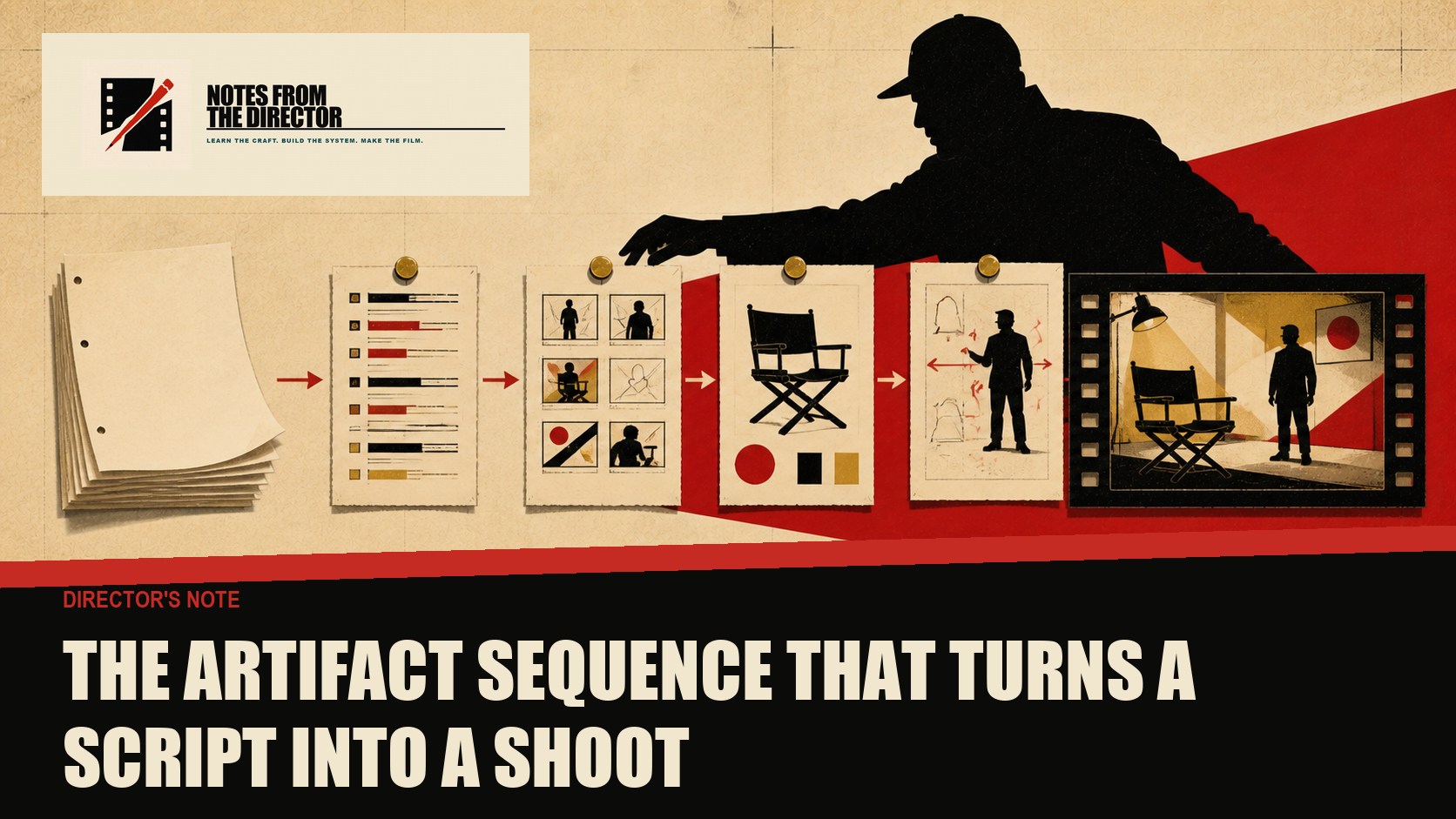
A script becomes shootable when each production artifact converts story intention into visible work another person can prepare and complete.
Read the note
A believable schedule begins with the rate finished work actually moves through the pipeline, not the speed of your best day.
Read the note
A team cannot own a vague ambition. Give each person a visible unit of work, a handoff, and a definition of finished.
Read the note
A useful visual constraint does two jobs at once: it reduces repeated production cost and makes the film more unmistakably itself.
Read the note
Do not ask limited resources to imitate an unlimited production. Let real capacity shape a version of the film that can finish.
Read the note
Production gives a lesson weight. The problem, decision, consequence, and finished result show students where the principle becomes useful.
Read the note
A clear lesson proves that you can explain the craft. A completed production tests whether you can carry it under pressure.
Read the note
Early expertise becomes dangerous when protecting the title matters more than listening, practicing, and finishing better work.
Read the note
Theory gives you language and options. Production reveals whether you can use them when the result, deadline, and people are real.
Read the note
You do not need permission to begin. You need finished evidence before asking the identity to carry professional weight.
Read the note
Reading can prepare you to direct. A constrained, completed project is what turns preparation into directing experience.
Read the note
Do not copy the frame. Study the problem, the available choices, and the consequence that made the shot matter.
Read the note
Taste grows when admiration becomes analysis, and analysis becomes a production decision you can test in your own work.
Read the note
Your habits may reveal your creative direction more honestly than your declarations. Look at what you protect, organize, and revisit.
Read the note
Creative time is easier to defend when bills, chores, and other predictable obligations are handled before they become emergencies.
Read the note
Not everything you love has to become a career. A vocation asks your passion to accept responsibility and produce useful work.
Read the note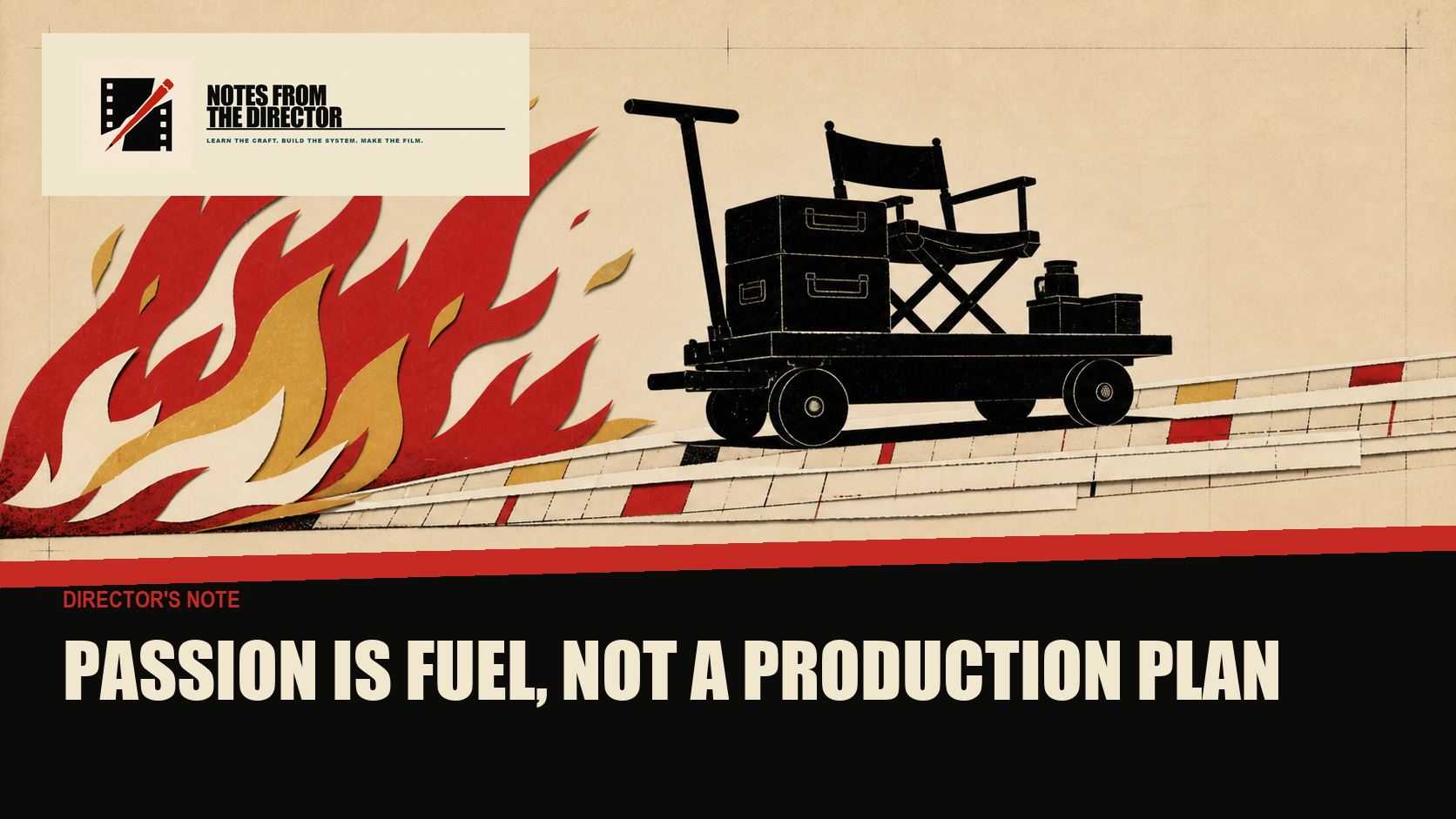
Passion can get you moving. A production plan tells that energy where to go when excitement is no longer enough.
Read the note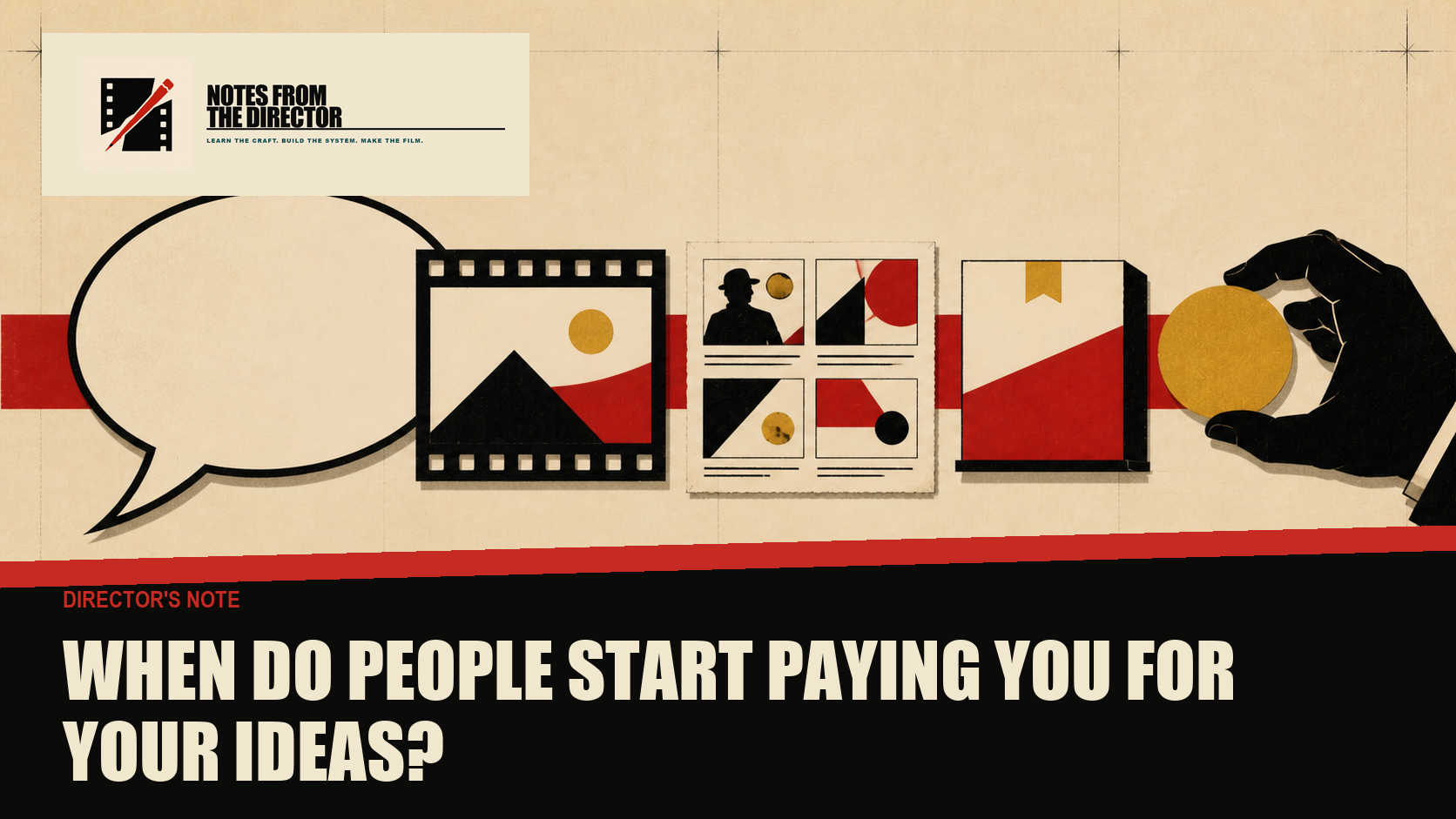
An idea becomes professionally valuable when your finished record shows that your judgment can survive execution.
Read the note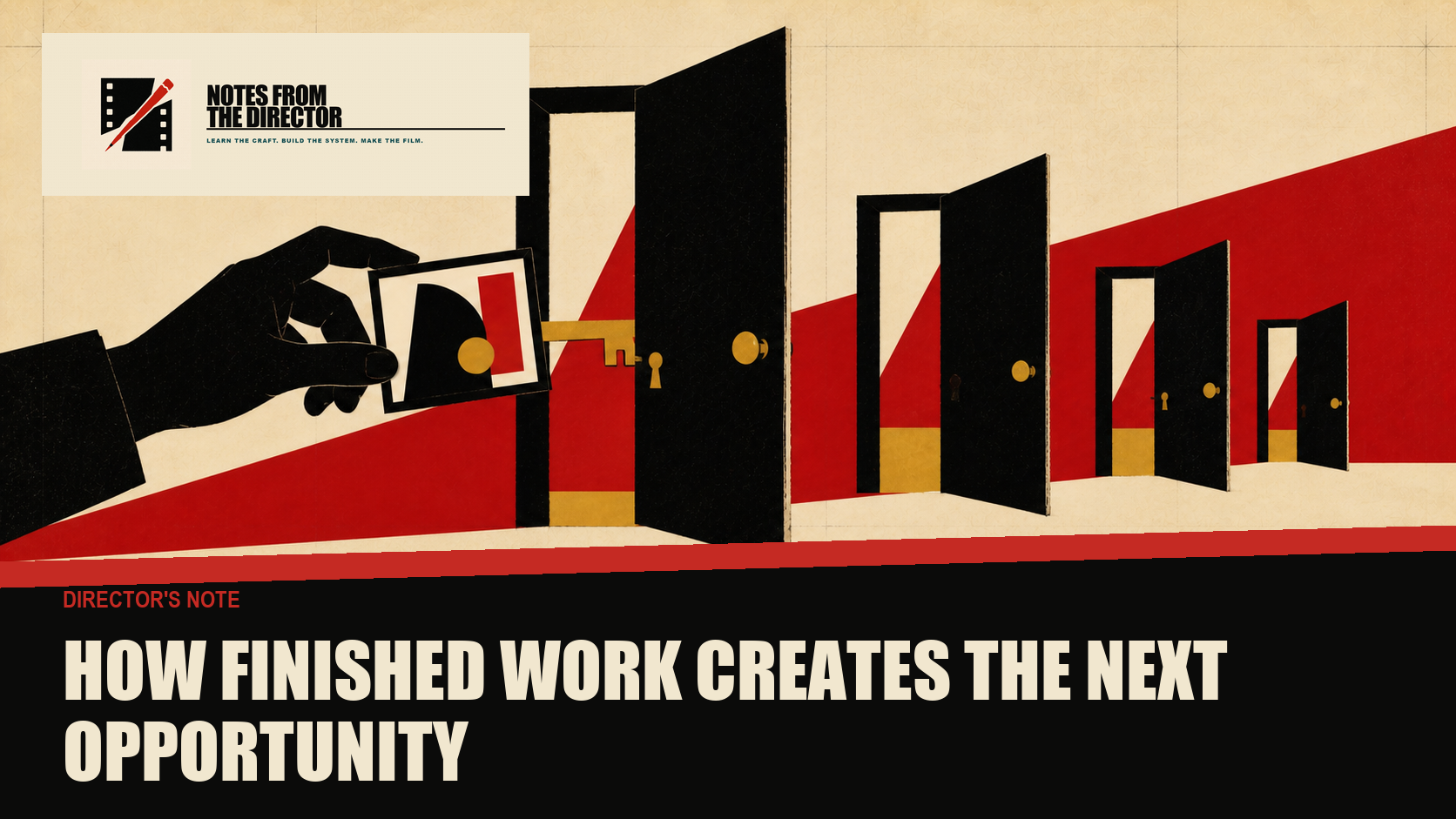
A finished project gives other people something they can judge and share. That evidence can open the next door.
Read the note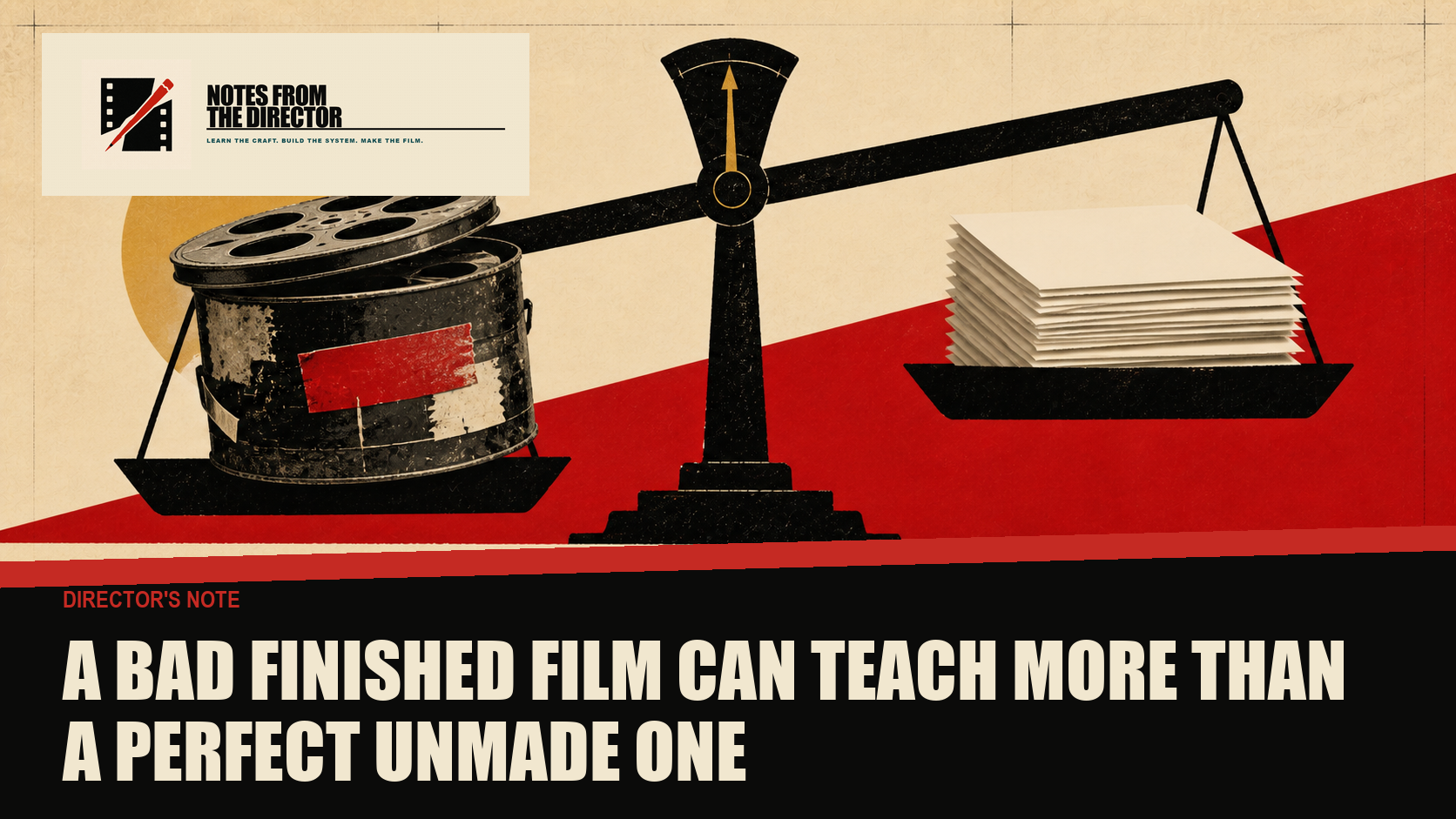
An imperfect finished film can reveal your real strengths and gaps. An unmade masterpiece can reveal neither.
Read the note
Readiness is not the absence of flaws. It is the point when a complete work can meet an audience and teach you what private polishing cannot.
Read the note
Interest is not delivery. A creative business needs one owned path from the customer's request to the finished result.
Read the note
Smaller scope does not mean smaller ambition. It means protecting the core idea long enough to finish a complete version.
Read the note
Revising the opening again is not the same as finishing. Learn how to stop restarting and close one complete version.
Read the note
The idea that deserves production is not always the biggest one. It is the one you can define, support, and finish now.
Read the note
New ideas feel productive, but they can steal the attention your current project needs to cross the finish line.
Read the note
Confidence is not a reassuring email. It is a sequence of small proofs that the work, decisions, and dependencies remain under control.
Read the note
A deadline is not one square on a calendar. It is a promise other people use to organize their lives and work.
Read the note
A logo can identify you and a story can explain you. The promise you keep repeatedly is what people learn to trust.
Read the note
Clients may enjoy your story and admire your process. They hire you because they need a specific problem solved.
Read the note
A degree can open a door and a credit can start a conversation. The work someone can inspect is what makes the claim believable.
Read the note
Your story can earn attention. It cannot do the work of a finished artifact or a promise kept under pressure.
Read the note
Confidence is easy to perform. A useful mentor can show the work, name their responsibility, and explain what their decisions cost.
Read the note
Credentials can open a door. Finished work proves what responsibility you can carry once you enter the room.
Read the note