The answer in brief
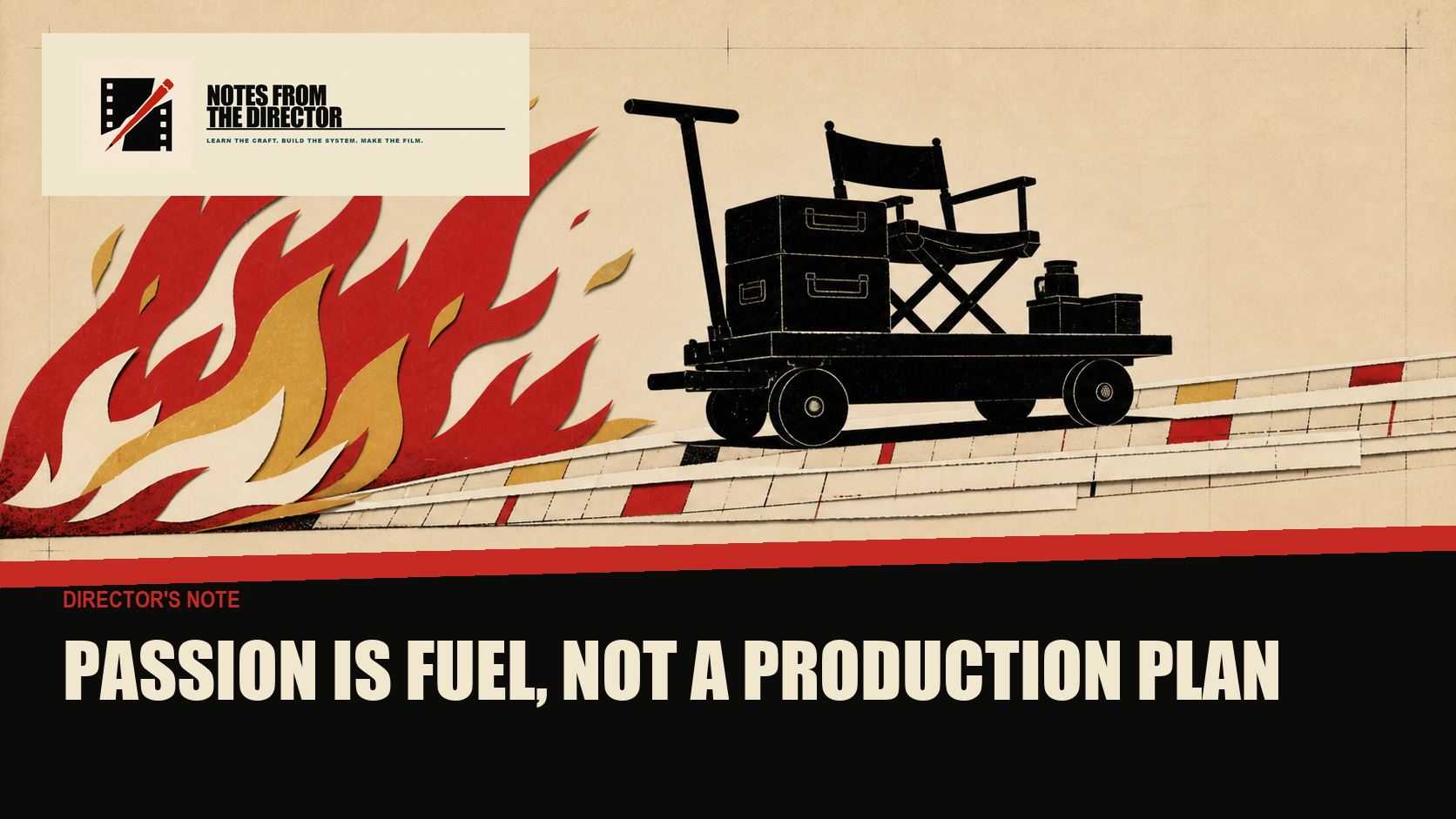
Passion is not enough to finish a film because emotion cannot replace scope, sequence, ownership, or time. Passion can help you begin and return to difficult work. A production plan converts that energy into defined deliverables, scheduled actions, and decisions that still function when the excitement fades.
What is passion actually good for?
Passion gives attention intensity.
It can get you out of bed, pull you toward a subject, and make you care enough to endure the first obstacle. It can make a conversation electric and help another person see why the work matters.
Those are real advantages.
In the book, I describe how intensely I can talk about films, stories, and the survival game DayZ. I built a character inside the game, developed a catchphrase, and became part of stories other players remembered. The experience brought excitement and friendships.
It did not automatically move my creative career forward.
That distinction matters because a feeling can be deep, memorable, and personally valuable without functioning as production.
Why does passion fail under ordinary conditions?
Production contains long stretches that do not feel like the original inspiration.
Files need names. Schedules need updates. Equipment needs preparation. A scene needs another revision. A collaborator needs a clear answer. Bills, chores, health, and family responsibilities still exist while the film is being made.
Passion is unreliable as a daily control system because intensity changes. On a strong day, you may overcommit. On a weak day, the absence of excitement may feel like evidence that the project is wrong.
A plan keeps those moods from redefining the work every morning.
It tells you what happens next, what is enough for today, and what condition allows the project to move forward.
How do you convert passion into a production plan?
Start with the artifact, not the emotion.
Write what will exist when the current version is done. Then move backward through the major states required to create it. For a short film, those states might include a locked script, confirmed resources, a shoot, an assembled cut, picture decisions, final sound, and a tested delivery file.
For each state, define:
- The person who owns it
- The artifact that proves it is complete
- The date it must be complete
- The decision or input it depends on
- The fallback if that dependency fails
Now passion has a track.
It can energize the work without being asked to invent the route every day.
What is the difference between a goal and a production commitment?
"Make my film" is a goal. "Complete a reviewable three-minute cut from the approved footage by Friday" is a production commitment.
The commitment names an artifact, a boundary, and a date. Another person can tell whether it happened.
Convert the project into weekly commitments small enough to verify. Avoid filling the calendar with vague activities such as work on script or improve edit. Name the state change.
Examples include:
- Reduce the script to five shootable pages.
- Confirm one location and one backup.
- Export a full rough cut with every scene represented.
- Resolve the three notes blocking picture approval.
- Deliver the final file in the agreed format.
The work becomes visible, and visible work can be managed.
What happens when passion points somewhere else?
Capture the new interest without letting it take control of the active slate.
Passion can attach itself to a game, a new technique, a different story, or a fresh business possibility. The new thing may be worthwhile, but it has not earned the right to interrupt the current promise simply because it feels intense.
Ask:
- Does this interest support the active project's next milestone?
- Is it recovery, research, or avoidance?
- What committed work would be displaced?
- Can it wait until the scheduled review?
Hobbies and escapes do not need to justify themselves as career moves. They need honest boundaries so they do not quietly consume the production time you claim to protect.
What should your passion-to-plan conversion include?
Use this short brief:
- Why this project matters to me
- Who the finished work is for
- What exact artifact will be delivered
- What is excluded from this version
- What must happen each week
- Which unavoidable obligations need time first
- What I will do when motivation is low
- Who can see whether I kept the commitment
- Where and when the final work will be shown
The plan should be plain enough to use on a tired morning. If it depends on feeling inspired before the next action makes sense, it is still a wish.
Passion is not the enemy of discipline. It is what discipline protects from being wasted.
Let the feeling tell you what deserves care. Let the production plan carry that care through the days when making the film looks less like inspiration and more like work.
Next production note
Before a passion becomes a career direction, it helps to decide whether it is a vocation, a useful hobby, or a favorite escape.
Continue to: Is This Your Vocation or Just Your Favorite Escape?
Notes From the Director Learn the craft. Build the system. Make the film.
Source note
This article is adapted from No One Gives a F Until It's Done, PDF pages 21-25. Wayne's reflections on intense interests, DayZ, motivation, and productive action provide the firsthand basis.