The answer in brief
Identify the creative work you truly value by examining your behavior. Notice what you organize, preserve, revisit, study, and make room for without being reminded. A respect inventory does not dictate a career, but it reveals durable attention that can guide your next serious experiment better than a passing declaration.
Why ask what you respect instead of what you love?
Love is easy to claim because it describes a feeling. Respect leaves evidence in behavior.
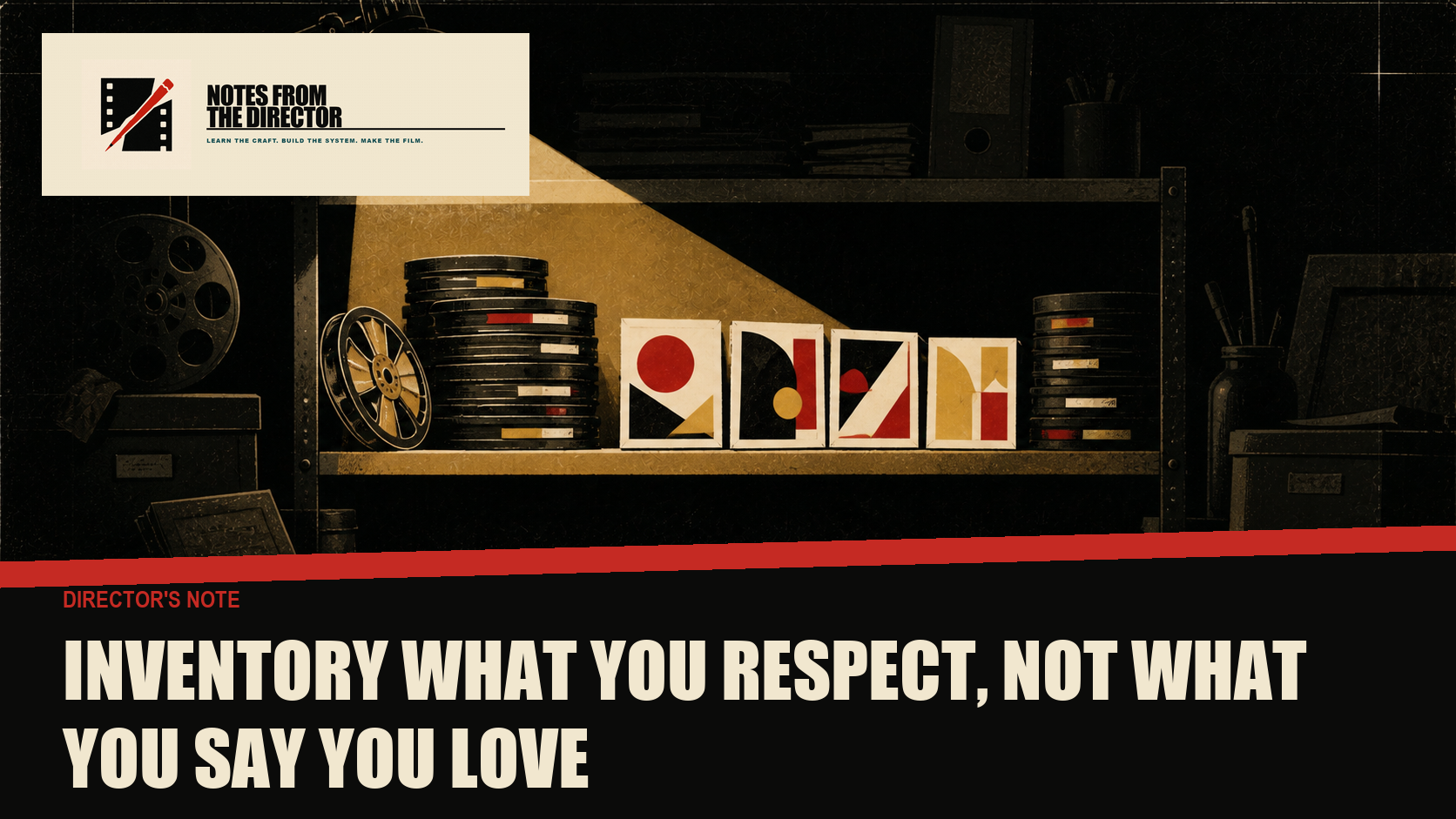
In the book, I describe taking an inventory in my early twenties while trying to understand what I wanted from a creative career. I looked at the objects around me.
My music collection was scratched and disorganized. Clothing and cars did not hold much attention. My film collection and comics were different. They were kept in order. I returned to them. The stories and visual storytelling mattered enough to receive care.
That contrast gave me a clue.
It did not prove that one career path was guaranteed. It showed where my attention had already developed a pattern of respect.
What does respect look like in everyday behavior?
Respect is visible in the way you handle an object, practice, or body of work.
You may preserve it carefully, seek strong examples, notice details other people ignore, revisit it over years, or feel responsible for understanding how it works. You may spend time with it even when there is no social reward.
Look for actions such as:
- Organizing and protecting the work
- Returning to the same examples across years
- Seeking better editions or deeper context
- Comparing choices, not merely consuming plots
- Remembering how a scene, page, or image was constructed
- Feeling bothered by careless execution
- Trying to make something in the same medium
The pattern matters more than any single purchase or favorite title.
How is this different from collecting?
Collecting can be evidence of respect, but ownership alone is not direction.
You can own shelves of films and never study how a shot changes meaning. You can buy tools and avoid practicing. You can maintain a beautiful library because the identity of being a filmmaker feels good.
Ask what you do with the collection.
Do you return to the work with questions? Do you notice decisions? Does it influence what you attempt? Can you explain what you respect without relying on reputation? Have you turned any of that attention into a finished exercise?
Respect becomes vocational evidence when it changes practice.
How do you run a respect inventory?
Begin with your physical and digital environment.
- What creative work is organized or protected?
- Which files, books, films, images, or tools have survived several moves or device changes?
- What do you revisit without needing an assignment?
- Which subjects receive your most precise opinions?
- What do you study when nobody will know?
- What do you keep saying you love but consistently neglect?
- What have you made because of the work you admire?
Then review time. Look at the last three months of viewing, reading, making, conversation, and spending. Do not judge the results yet. Look for concentration.
Finally, write the repeated qualities rather than only the titles. You may discover that you respect disciplined visual storytelling, severe production constraints, moral conflict, physical action, intricate systems, or work that turns ordinary spaces into myth.
Those qualities can guide a project more usefully than imitation.
What if the inventory reveals several directions?
Choose an experiment, not a permanent identity.
Combine no more than two or three repeated qualities into a small finished artifact. If you respect concise visual storytelling and practical problem solving, make a short scene that depends on action rather than explanation. If you respect worldbuilding and rules, create one playable encounter with a clear end.
Set a production boundary and a review date. The experiment should answer whether you enjoy making the decisions, not only consuming the result.
This protects you from turning the inventory into another abstract self-description.
What if your stated passion and behavior disagree?
Treat the disagreement as information, not a sentence.
Perhaps the claimed passion belongs to an earlier version of you. Perhaps access, exhaustion, or fear has kept the behavior from matching the value. Perhaps you admire the status around the field more than its daily work.
Test the difference with a scheduled action.
- Choose one small practice in the claimed field.
- Give it protected time for four weeks.
- Finish one artifact.
- Record which parts drew you back and which parts you avoided.
- Compare the evidence with the respect inventory.
Direction becomes clearer when feeling meets responsibility.
How should the inventory shape your next season?
Use it to choose what deserves deliberate study and production.
Select a small personal canon of work that demonstrates the qualities you respect. Select one craft practice that helps you understand those qualities. Select one finishable project that forces you to make related decisions.
Do not ask the objects on your shelf to appoint you. Let them reveal where sustained attention already exists, then prove the direction through work.
The inventory is a clue. The finished artifact is the test.
Next production note
Once you know what you respect, you can turn admiration into a deliberate program for training your taste.
Continue to: Train Your Taste With Work Worth Studying
Notes From the Director Learn the craft. Build the system. Make the film.
Source note
This article is adapted from No One Gives a F Until It's Done, PDF pages 26-28. Wayne's inventory of music, clothing, cars, comics, and films provides the firsthand method for identifying durable creative respect.