Define the work before the tool runs
Build a brief from what actually matters, then judge output against an intention instead of surface polish.
AI can multiply your creative output. AI Cannot Own the Decision shows why intention, taste, and responsibility still belong to the person directing the work.
For filmmakers, designers, writers, producers, and creative leads already using AI on work that will reach a client or the public.
Amazon controls current price, availability, shipping, and edition details.
You can ask for forty versions and receive them before the old work would have begun. They may all look plausible. Several may look finished. None of that tells you what the work is for, which result serves the intention, or what should reach another person.
The tool did not take the decision away. It made the decision easier to avoid.
That is the new creative problem: greater execution power with no automatic increase in judgment.
Artists have always worked through other hands. Masters ran workshops. Directors led crews. Architects designed buildings they did not personally lay brick by brick.
AI brings that kind of production capacity to one desk. It can suggest, combine, draft, render, and revise at extraordinary speed. It cannot decide what deserves emphasis, what violates the intention, what is worth finishing, or what you are prepared to release.
Those decisions are the work only you can own.
Build a brief from what actually matters, then judge output against an intention instead of surface polish.
Use AI aggressively for execution while protecting the choices that determine meaning, emphasis, and responsibility.
You cannot watch everything a high-output workshop can produce. You can decide where judgment must enter and keep the final pass human.
The book connects creative practice, the old master workshop, filmmaking, and the formation of taste without pretending that a checklist can make decisions for you.
Wayne Harry Johnson Jr. has spent 30 years across filmmaking, design, VFX, animation production, and live events. He has directed four feature films and held production leadership roles on Netflix and Amazon animated series.
He understands both the image and the machinery required to deliver it.
This book brings that working-room experience to the question facing every serious creator using AI: how do you gain the capacity without giving away the judgment?
Decide what the work must do before production speed takes over.
Decide what AI may execute, what it may inform, and what remains yours.
Put personal review where it can still change the work before release.
The book does not promise a formula for taste. It gives you a clearer way to locate the judgment, process, and responsibility your tools cannot supply.
Without a clear intention, more output becomes more noise. Without protected review points, polish can pass for purpose. Without a human final pass, responsibility remains with you while control slips away.
With a real brief, boundaries, and deliberate review, the same speed can serve stronger work. You can make more, decide more clearly, and release work that still answers to a human standard.
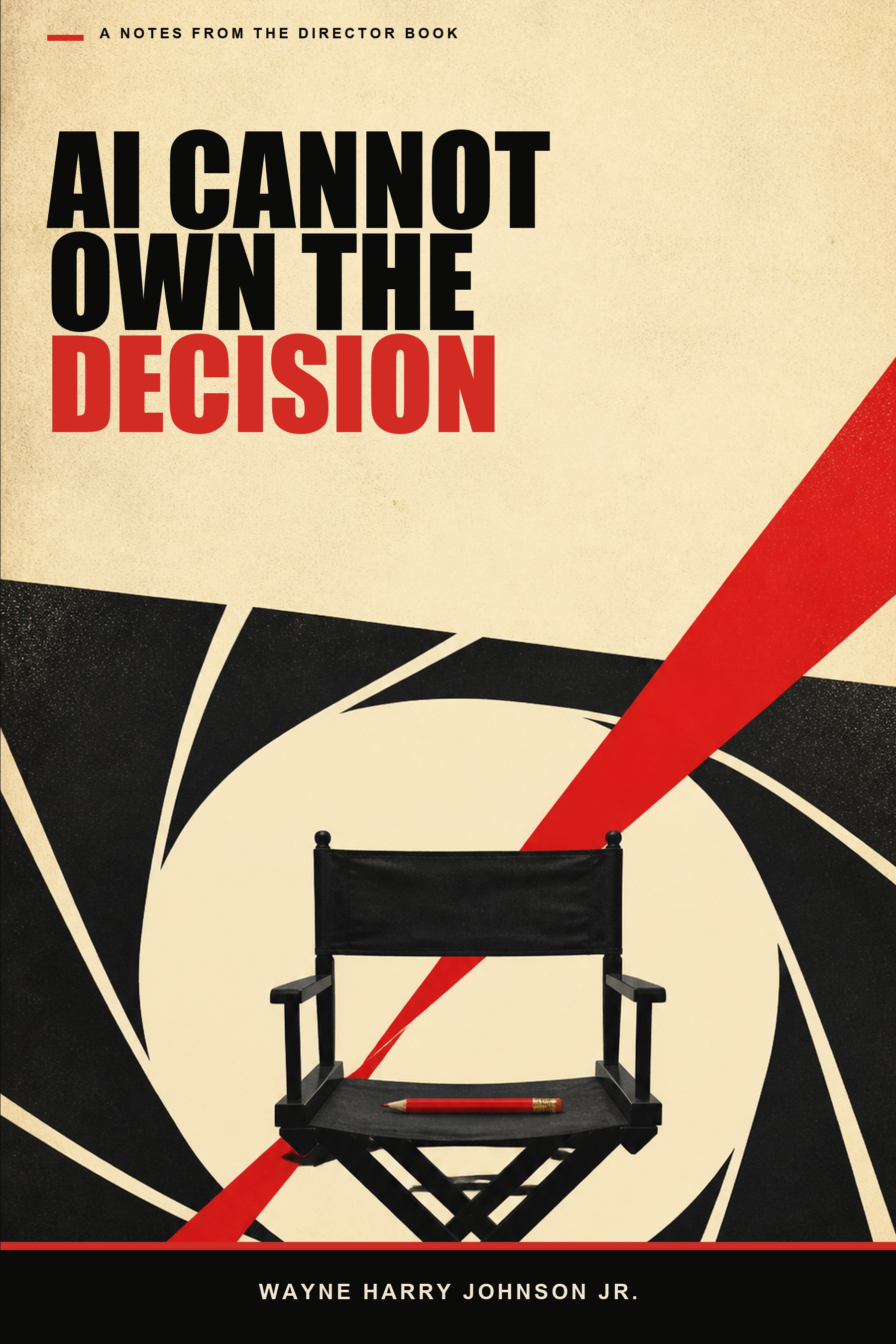
AI Cannot Own the Decision
Wayne Harry Johnson Jr.
Choose the print reading experience or start immediately on Kindle. Amazon supplies current pricing and availability.
No. It takes the tool’s speed and capability seriously. Its argument is that execution can be delegated while judgment and responsibility remain human.
No. It is a short practical philosophy of creative judgment, built from painting, filmmaking, workshops, taste, and current AI-assisted work.
Creators already using AI, or preparing to use it, on work that must satisfy a real intention and carry real consequences.
Yes. The book states plainly that an AI language model helped draft portions under Wayne’s direction. Wayne owns the ideas, editorial decisions, and judgment about what remained.
Use the tools. Direct the work. Own the decision.