The answer in brief
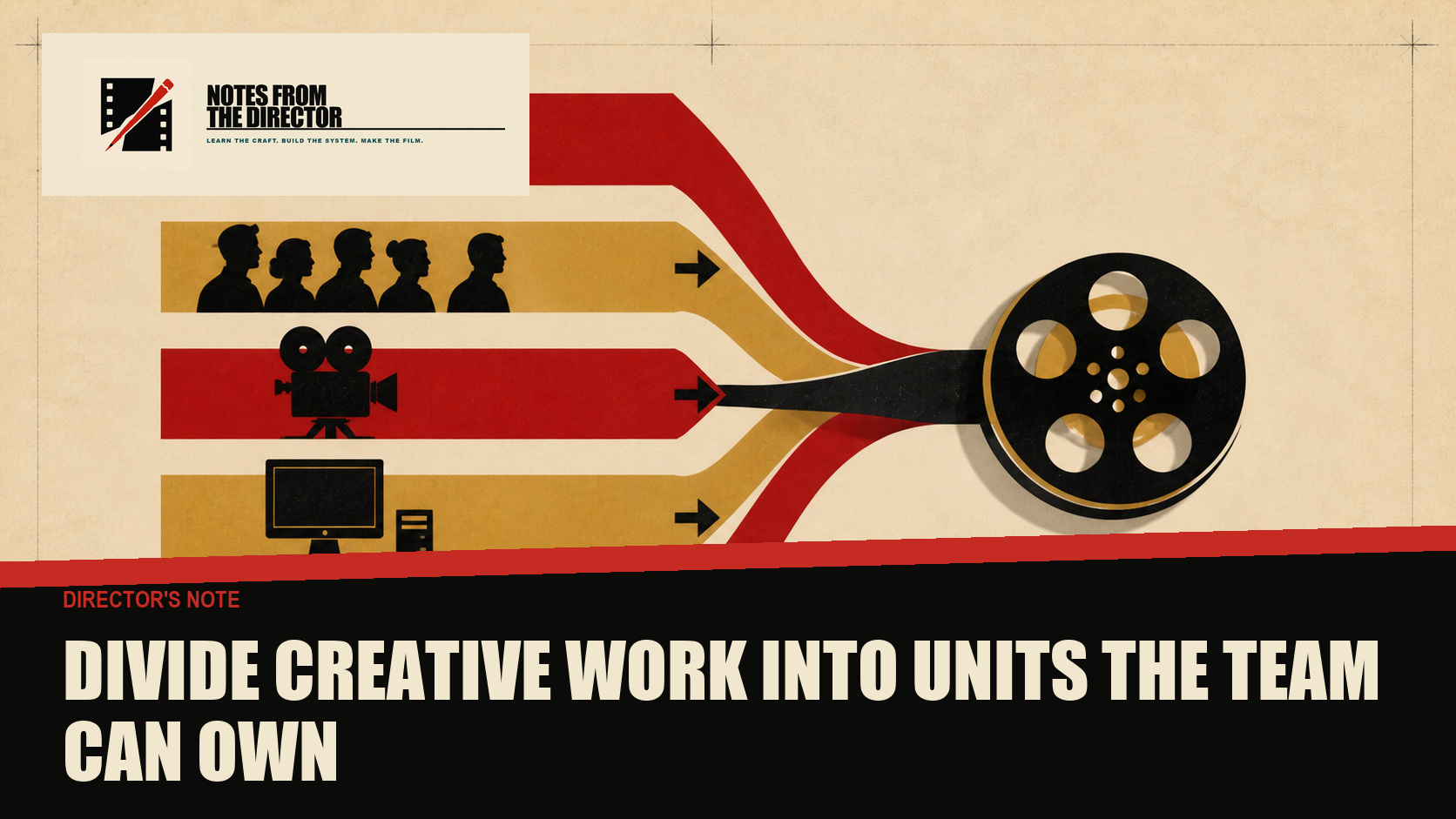
A small team should divide film or animation production into visible work units that one person can own from start to accepted handoff. Organize the work by assets, scenes, shots, or departments according to the pipeline. Every unit needs an owner, inputs, due condition, review point, and destination so creative collaboration does not become shared ambiguity.
Why does shared ownership often create unowned work?
A group can agree passionately that the film matters while remaining unclear about who completes the next piece.
Creative language makes this worse because tasks are often described as intentions: develop the look, improve the scene, finish the animation, help with sound. Everyone understands the direction. Nobody can point to the exact object that should exist at the handoff.
The smaller the team, the more dangerous that ambiguity becomes. One missing asset can stop a person who is also responsible for three other roles.
Shared purpose is valuable. Work units still need individual ownership.
How did we divide Pod 4?
The production was designed around the people and equipment we actually had. After storyboarding and establishing a fast black-and-white style, we divided sets and character design among a few people. Animation for individual scenes went to different animators. I directed and handled rendering. Editing and sound effects occupied their own phase.
The division followed the production pipeline.
Assets had to exist before scenes could be animated. Animated scenes had to be rendered before they could be cut. The edit exposed the needs of sound. Each unit moved the film toward another department.
That movement matters more than keeping everybody busy. A team can be fully occupied while the film remains blocked.
What makes a work unit useful?
A useful unit is small enough to finish, large enough to matter, and clear enough to review.
It should answer five questions:
- What exact artifact will exist?
- Who owns the next decision?
- What inputs must be approved before work begins?
- What condition makes the unit acceptable?
- Where does it go after approval?
"Animate scene twelve" may still be too vague. Which shots are included? Are the characters and camera approved? Does acceptable mean blocking, polished animation, or a rendered sequence ready for editorial?
The unit becomes real when two people would independently recognize the same finish.
Should a small team divide by department or by scene?
Use the division that reduces handoffs without hiding specialized work.
Asset-heavy animation may benefit from department ownership for sets, characters, props, effects, animation, rendering, and sound. A very small live-action project may divide ownership by production phase or scene. A hybrid project may need both.
The test is flow. Can the next person begin without searching for the current file, guessing whether it is approved, or rebuilding a missing decision?
Do not create a complicated department chart for two people. Do not pretend ten specialists are one undifferentiated creative team. Match the map to the real work.
How do you build a work-unit assignment board?
Create one card for every unit that can block another unit.
- Unit ID: A stable name for the asset, scene, shot, or deliverable
- Owner: One person accountable for moving it
- Input: The approved material required to start
- Finish condition: What must be true for review
- Reviewer: The person who accepts or returns it
- Handoff: The next unit or department
- Due point: The date supported by the schedule
- Status: Not ready, ready, working, review, revision, or accepted
If two people share the owner field, choose the person who must speak when the unit stops moving. Collaboration can remain broad. Accountability needs one address.
How do you protect creativity inside a divided system?
Define the decision boundary, not every creative move.
An animator may own performance and timing inside approved storyboards, characters, and shot length. A set designer may explore within the established visual rule and required camera views. An editor may shape rhythm while protecting the scene's intended turn.
The board should make constraints visible so creative energy is spent where a real choice exists.
Micromanagement gives every decision back to one person. Ambiguity gives every problem to the deadline. Clear ownership creates space between those failures.
What should happen at each handoff?
The receiving person should be able to answer three questions immediately.
Is this the current approved version? Does it meet the finish condition for this stage? What am I expected to produce next?
If the answer requires a meeting every time, the handoff is not designed yet.
Use simple naming, visible approval, and a short note when a decision affects later work. The purpose is not administrative perfection. It is keeping the film moving without making people reconstruct context.
How does ownership help a team finish?
Visible units create visible progress. The team can see which departments are building momentum and which blockage threatens the schedule.
They also make a hard conversation more accurate. Instead of saying, "The project is behind," you can identify the units waiting for decisions, the throughput that changed, and the work that must be reassigned or simplified.
A finished film is made of finished parts moving through reliable hands. Divide the work so every part knows where it belongs next.
Next production note
Once the units are visible, the schedule can be built from the rate those units actually move rather than the rate everyone hopes to achieve.
Continue to: Build a Schedule From Real Throughput, Not Hope
Notes From the Director Learn the craft. Build the system. Make the film.
Source note
This article is adapted from No One Gives a F Until It's Done, PDF pages 37-38. It uses Wayne's account of dividing Pod 4 sets, character design, scene animation, directing, rendering, editing, and sound across a small team and a phased schedule.