The answer in brief
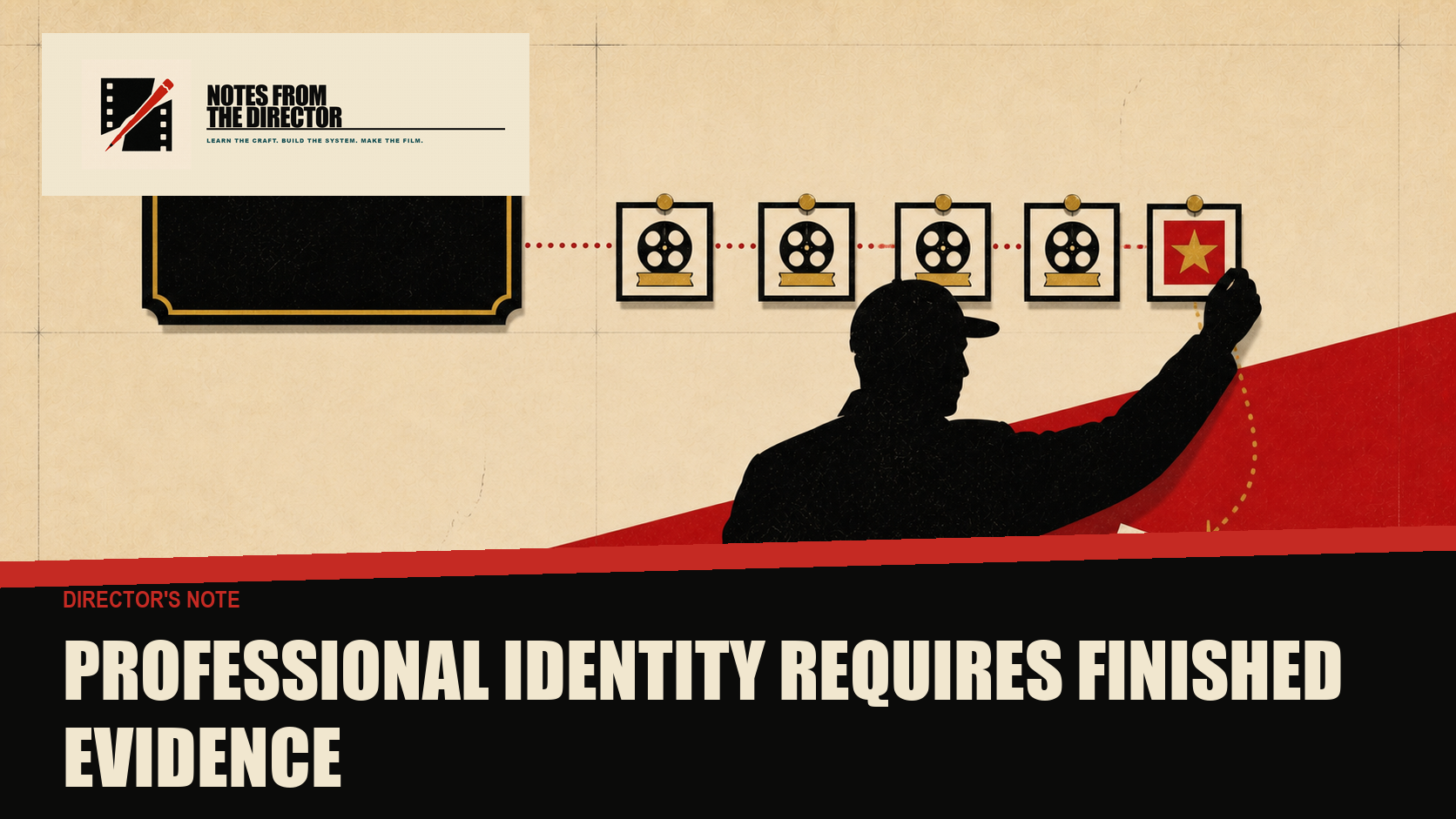
You can honestly call yourself a filmmaker or writer when you practice the craft and complete work that another person can encounter. The title does not require fame, permission, or a perfect career. It does require evidence. Starting shows intention. Finishing shows that you accepted the decisions, compromises, and responsibility built into the identity.
Is it wrong to claim the identity before you feel established?
No. Waiting for an institution, employer, or audience to grant the title can become another way to avoid the work.
But a title should describe a practice, not replace one.
In the book, I make a distinction that changed the way I saw myself. My passion for films did not make me a filmmaker. My interest in filmmaking did not make me one. Making films did.
That standard is both harder and more generous than status. It does not ask whether your film won, whether your book sold, or whether a gatekeeper approved. It asks whether the work exists because you carried it through.
Why does finished evidence matter more than enthusiasm?
Enthusiasm can begin a project. It cannot answer what happened when the project became difficult.
A finished artifact contains decisions that aspiration does not. The filmmaker chose what to shoot, what to cut, how to solve missing coverage, and when the piece was complete enough to release. The writer chose the structure, resolved the middle, revised the weak passages, and delivered a final manuscript.
The object may be imperfect. It may expose inexperience. That is part of its value. It proves you moved through the part of the process where taste collides with ability.
Finished evidence is not a trophy. It is a record of responsibility.
Does one finished project make someone a professional?
One project can validate the verb. Repetition strengthens the professional claim.
I write that Ultro-Pep took almost five years to finish. During that long production, I completed three other short films. Over two decades, I made ten films. The identity did not arrive as a feeling before those projects. It accumulated through them.
Professional identity is therefore not one dramatic announcement. It is a pattern:
- you choose work you can carry
- you make real decisions
- you deliver a complete artifact
- you learn from the result
- you begin again with better judgment
The pattern matters because other people eventually depend on it. A collaborator, client, or audience needs more than your internal certainty. They need something they can see and a reason to believe another finish is possible.
What counts as finished evidence?
Finished does not always mean commercially distributed or technically flawless. It means the piece reached its declared acceptance condition.
For a short film, that might be a complete cut with sound, titles, and an export someone can watch from beginning to end. For a screenplay, it might be a revised draft prepared for a specific reader. For a book, it might be a complete published edition rather than scattered chapters. For a production system, it might be a workflow the team has used to deliver one real project.
Define the condition before the hardest part arrives. Otherwise, perfection will keep moving the line.
How do you run the identity evidence test?
Choose the professional title you want to use, then answer these questions without describing your potential.
- What finished artifact supports the title?
- What part of the artifact did you personally own?
- What constraint did you have to manage?
- What decision changed the final result?
- What problem appeared after the exciting beginning?
- How did you know the work was complete?
- What did the finish teach you to do differently next time?
If you cannot answer yet, do not shame yourself. Turn the gap into a project brief.
Write the smallest artifact that would let you answer all seven questions honestly. Give it a deadline. That becomes your next piece of evidence.
What should you avoid when presenting the work?
Do not inflate your role. Accuracy makes the evidence stronger.
If you directed the film, say so. If you edited it, say so. If you helped produce one department, name that department. A clear description of your actual responsibility lets people judge the work without having to untangle a larger claim.
Do not hide an early project because it is not as good as the work in your head. You can frame it correctly: this is what you completed, this is what you owned, and this is what it taught you.
The work is not proof that you have nothing left to learn. It is proof that you have entered the learning that only completion provides.
How does the identity become durable?
Build a body of finished evidence at a scale you can repeat.
The professional is not the person who never struggles. The professional has a way to keep making decisions when passion cools, the schedule tightens, or the first version disappoints.
Call yourself what you practice. Then make sure the work can answer when somebody asks what the title means.
Next production note
Finished evidence establishes that you do the work. The next department asks whether your knowledge survives contact with production.
Continue to: Knowing the Theory Does Not Mean You Can Do the Work
Notes From the Director Learn the craft. Build the system. Make the film.
Source note
This article is adapted from No One Gives a F Until It's Done, PDF pages 29-30. The examples of Ultro-Pep, three additional shorts, and ten films over two decades come directly from Wayne's account in the manuscript.