The answer in brief
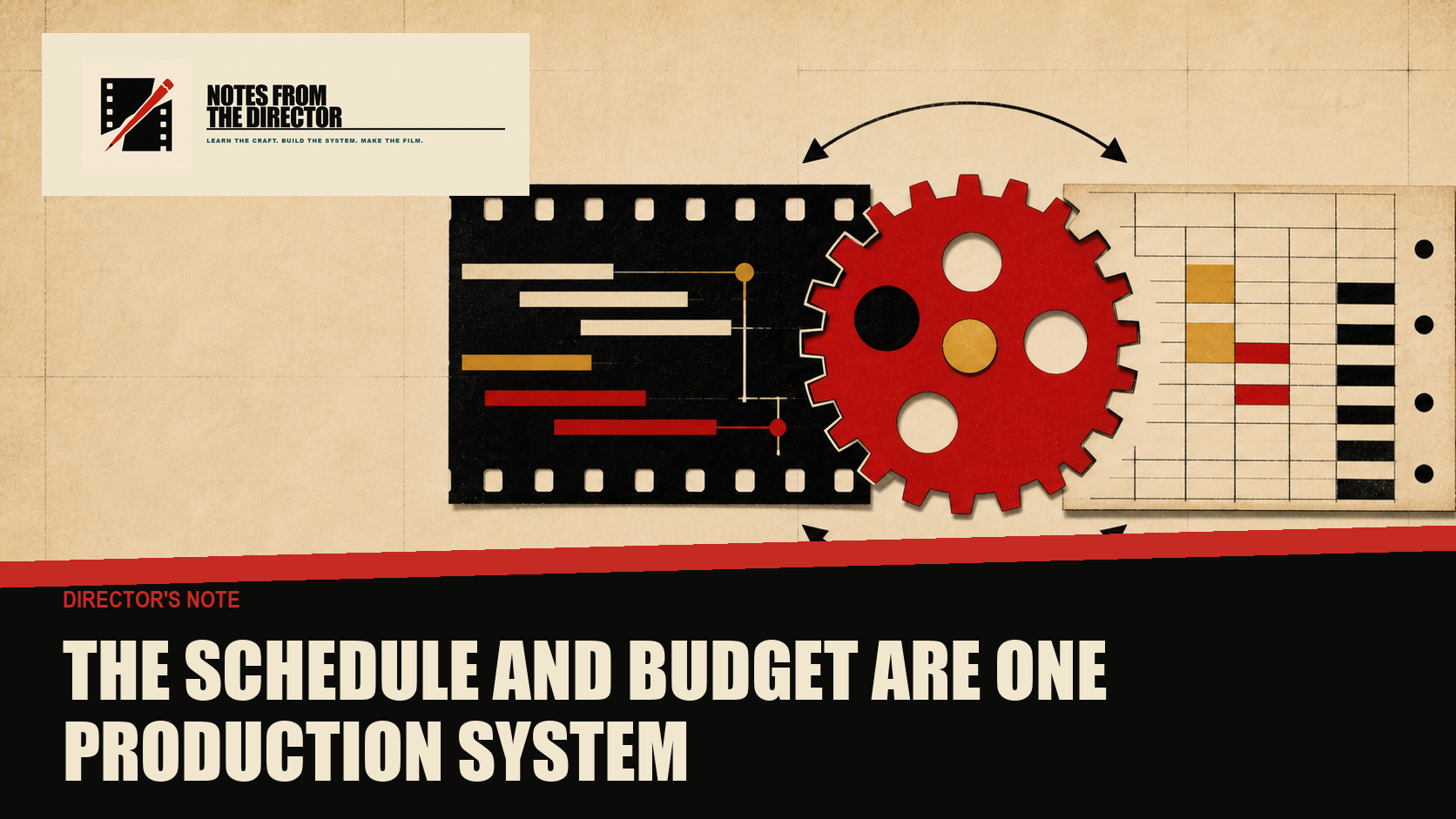
A film schedule and budget are two views of the same production system. The schedule decides when people, locations, props, equipment, and effects are required. The budget records what those choices cost. If either document changes without updating the other, the production begins spending against a plan that no longer exists.
Why is a schedule also a financial document?
A schedule may look like a calendar, but every block of time carries resources with it. A shooting day can require cast, crew, transportation, a location, equipment, food, makeup, effects, and time to reset everything for the next scene.
Move one scene and you may move all of those costs.
In the book, I describe learning this through production, not theory. On Ultro-Pep, we sometimes shot without a real schedule or budget. One day ran from noon until four in the morning. Members of the cast waited for more than twelve hours before their scenes, and we still had to return at noon the next day.
That was not just a long day. It was a system failure. Time was being spent without a dependable map of what the day required.
What happens when the two plans separate?
The budget becomes fiction when it assumes one schedule while the crew is living another.
The first visible consequence may be overtime or an added rental day. The deeper consequences arrive behind it. A tired crew moves more slowly. A late scene threatens the next location. An unavailable actor forces another change. A missing prop turns scheduled shooting time into waiting time.
None of those problems stays inside one spreadsheet cell.
The schedule tells you the order of operations. The budget tells you whether that order can be supported. They have to answer each other.
How should filmmakers build them together?
Begin with the script breakdown. Identify what every scene requires before assigning it a day. Then group scenes using actual production constraints, not the emotional order of the story.
For each proposed shooting block, test:
- which cast members must be present
- which location is controlled and for how long
- which props, wardrobe, makeup, and effects must be ready
- which equipment and specialist labor are required
- how much setup, shooting, reset, and travel time is realistic
- what the day costs if it finishes as planned
- what the day costs if the most likely delay occurs
Now look at the budget and ask whether it supports the schedule you built. If it does not, change the production design, scene grouping, staffing, or scope before the first shooting day.
What is a schedule-budget dependency map?
Make one page that shows the choices most likely to affect both time and money. This is not a replacement for a detailed schedule or budget. It is the director's early warning sheet.
For each major dependency, write:
- the scene or production unit
- the people and materials it requires
- the time assumption behind the estimate
- the cost if that assumption holds
- the cost and schedule effect if it fails
- the decision owner
- the latest safe decision date
The point is not to predict every disaster. The point is to expose where one late choice can spread across the whole production.
Keep this map beside the current schedule and budget during every major change. When a department reports a delay, review the connected cost before approving a new date. That habit turns the documents into an operating system instead of records that explain the failure afterward.
When should the plan change?
Change the plan when the facts change. Do not protect a schedule simply because it has already been printed.
But make the change in both documents. If a scene moves, update the labor, location, equipment, and delivery assumptions attached to it. If the budget loses money, identify what time, scope, or resource must change in response.
A smaller truthful plan is stronger than a large plan held together by hope.
How can a director test readiness before day one?
Run a short production test:
- choose the most complicated shooting day
- walk through it from crew call to wrap
- name every handoff and approval
- calculate the cost of the planned day
- identify the first likely delay
- calculate what that delay changes
- decide the contingency now
If the team cannot explain how the day works, the production is not ready to buy that day.
Planning does not make a film less creative. It gives the creative decisions somewhere to survive. The audience may never see the schedule or budget, but they will see what those documents made possible.
Next production note
Continue to: Break Down the Film Before the First Shooting Day
Notes From the Director
Learn the craft. Build the system. Make the film.
Source note
This article is adapted from "No One Gives a F Until It's Done," PDF page 43. It uses Wayne's account of Ultro-Pep and his conclusion that a successful production depends on a coordinated schedule, budget, breakdown, and contingency plan.